Medovia Medical
X-ray imaging supports millions of examinations each year, from chest radiographs to complex interventional procedures. Its clinical value is substantial, but radiation protection still requires disciplined planning. The United Nations Scientific Committee on the Effects of Atomic Radiation (UNSCEAR) identifies medical exposure as the largest human-made source of population radiation exposure. That finding makes protection practices more than a purchasing issue.
Why are lead aprons necessary during X-ray procedures? They can reduce unnecessary scatter exposure to radiosensitive organs when staff or patients remain near the radiation field. The International Atomic Energy Agency (IAEA) emphasizes justification, optimization, and dose limitation for occupational protection. However, modern guidance does not support wearing aprons automatically in every examination. Their use should reflect procedure type, distance, exposure frequency, and facility risk assessment. This point is often overlooked.
A properly selected apron should provide suitable lead equivalence, comfortable weight distribution, secure fastening, and visible quality documentation. It should also be inspected for cracks, creases, and storage damage. A damaged apron may offer unreliable protection. Small details matter.
China’s medical manufacturing sector supplies hospitals, imaging centers, dental clinics, and distributors worldwide. The China Top 10 Lead Apron Suppliers comparison therefore needs more than price lists. It should examine certification evidence, material consistency, product testing, customization capability, delivery performance, and after-sales support. ISO 13485 quality systems can strengthen confidence, but certification alone does not prove every product performs equally.
The conclusion is not perfectly simple. Lead aprons are valuable tools, yet they cannot replace engineering controls, proper positioning, staff training, or dose monitoring. A credible supplier helps healthcare teams build a complete protection program, not merely purchase protective clothing.
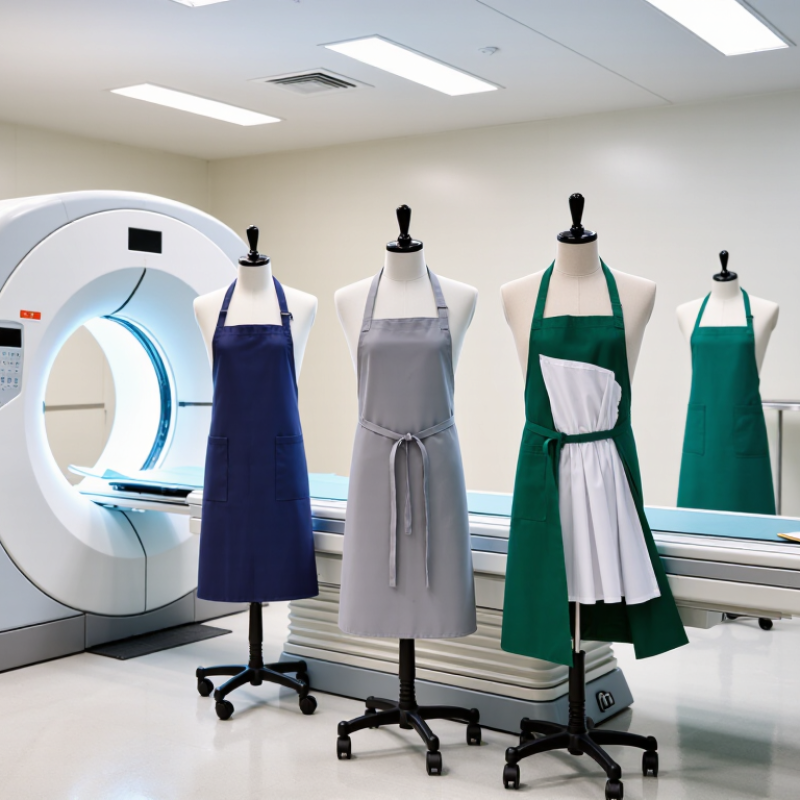
Lead aprons are protective garments designed to reduce exposure to scattered X-ray radiation. They usually contain lead or other high-density shielding materials. During fluoroscopy, dental imaging, and certain diagnostic procedures, nearby staff may face repeated scatter from the patient’s body. An apron creates an additional barrier around the torso. It does not block every photon. Protection has limits.
The apron works by absorbing and weakening part of the X-ray energy before it reaches sensitive organs. Its effectiveness depends on shielding thickness, coverage, fit, and distance from the source. A thyroid collar can protect the neck, while protective eyewear may reduce exposure to the eyes. Keep distance whenever possible. Never place an apron in the direct X-ray beam unless a qualified professional specifically requires it. This common shortcut can damage the apron and create unnecessary exposure.
Proper use requires more than wearing the garment. Staff should follow local radiation-safety procedures and use dosimeters when required. Aprons need regular visual and radiographic inspection. Small cracks may remain invisible from the outside. Store them flat or on approved hangers, rather than folding them. A damaged apron may look acceptable but offer uneven protection. Fit also matters; gaps around the shoulders or sides reduce coverage. Lead aprons are helpful, yet they cannot replace time reduction, distance, equipment shielding, and trained supervision. Controls should be reviewed when procedures change. That step is easy to overlook.
Lead aprons are necessary because X-ray and fluoroscopy procedures can produce scattered radiation. The body may receive repeated exposure near the patient, especially during long procedures. A properly fitted apron reduces radiation reaching radiosensitive organs, including the chest and reproductive areas. It does not eliminate exposure.
In industrial imaging, workers may stand near inspection systems, test pieces, or controlled viewing areas. Aprons can provide additional protection during positioning, maintenance, or unexpected delays. However, they cannot replace distance, shielding, exposure controls, or trained supervision. An apron is not a magic shield. Its value depends on correct use and regular inspection.
Tips: Choose suitable lead-equivalent protection for the work. Check seams, fasteners, and surface damage before each use. Never fold an apron, because creases can weaken its protective layer. Store it flat or on a proper hanger. Suppliers should provide clear specifications, test documentation, sizing options, and practical care instructions. A radiation safety professional should confirm whether the garment matches the procedure. This step is sometimes skipped, and that can create false confidence. Comfort also matters. If an apron is too heavy or poorly fitted, workers may wear it incorrectly or avoid it altogether. Good protection must be usable, maintained, and reviewed as working conditions change.
Evaluating China’s top lead apron suppliers requires more than comparing online prices. Start with protection performance. Ask for recent test reports showing the apron’s lead-equivalent thickness, material consistency, and inspection methods. Documents should be clear, traceable, and linked to the actual production batch. Vague certificates deserve closer questions.
Fit still matters. A reliable supplier should offer accurate size charts, adjustable closures, and different designs for standing or seated use. Check the apron sample by hand. It should feel flexible, without hard lumps, exposed edges, or uneven seams. Fold resistance also matters, because repeated creasing can damage protective materials. Ask how the factory recommends hanging and cleaning each product.
Production quality reveals more than polished photographs. Review factory audit records, incoming material controls, stitching checks, and final inspections. A supplier that explains rejected-product handling shows stronger quality awareness. Communication is another practical test. Can the team answer technical questions directly? Can it provide a sample before bulk production? Can it manage replacement requests responsibly?
Do not trust price alone. Very low quotations may exclude testing, packaging, or after-sales support. Lead aprons should be labeled clearly and packed to prevent deformation during shipping. No checklist is perfect. Even experienced buyers can overlook comfort during long procedures. A trial with actual users may reveal shoulder pressure, poor coverage, or difficult storage. Those details often decide whether a supplier is genuinely dependable.
Reliable lead aprons should meet recognized radiation-protection standards, such as IEC 61331-3 and applicable local requirements. These standards address protective performance, labeling, and testing methods. A trustworthy supplier should provide test reports, material specifications, and clear lead-equivalent ratings, commonly 0.25, 0.35, or 0.50 mm Pb.
Good design matters in daily clinical work. The apron should cover the chest, abdomen, and sides without restricting movement. Secure fasteners, reinforced seams, and a balanced fit reduce gaps and shoulder strain. Lightweight composite materials may improve comfort, but thicker protection is not automatically better. Quality can vary between production batches. That point deserves attention.
Tips: Check the apron before each shift. Look for creases, cracks, torn stitching, or damaged closures. Never fold it sharply; hang it on a broad support. Arrange periodic imaging inspections, because internal damage may remain invisible. Keep records of purchase dates and inspection results. Fit testing is useful, but it is sometimes skipped in busy departments. That is a practical weakness worth correcting. Reliable protection depends on the product, correct use, and honest maintenance.
Lead aprons are necessary because diagnostic X-rays can produce scattered radiation. Reliable aprons are identified by a clearly stated lead-equivalent thickness, such as 0.25 mm Pb, 0.35 mm Pb, or 0.50 mm Pb. These ratings are commonly used in protective garment specifications and should be verified through recognized test methods such as IEC 61331-3 or ASTM F2547/F2547M. The required rating depends on the procedure, radiation exposure, and workplace protection assessment.
Medical imaging creates a large artificial source of population radiation exposure, according to the UNSCEAR 2020/2021 report. A reliable lead apron supplier supports safer daily practice. However, an apron is not a substitute for distance, shielding design, or exposure optimization.
When choosing a Chinese supplier, request test reports against IEC 61331-1, IEC 61331-2, or applicable local standards. Check the stated lead equivalence, such as 0.25, 0.35, or 0.50 mm Pb, at defined X-ray energies. Numbers without test conditions are weak evidence. Very important. Ask for independent laboratory results, batch traceability, material declarations, and a clear warranty.
Inspect the physical details. The apron should cover the chest, pelvis, and sides without restricting movement. Overlap panels should not leave gaps during bending. Try a sample for ten minutes. Weight matters more than many buyers expect. NCRP Report No. 177 emphasizes equipment, procedure, and staff factors in radiation protection, not clothing alone. A supplier should explain storage methods and routine checks for folds, cracks, and damage.
Price alone can mislead. A low quotation may hide poor sizing or inconsistent shielding. I would also compare production capacity, export experience, inspection records, and response speed. Factory photographs are not proof. An on-site or third-party audit is stronger. One practical weakness remains: supplier documents can look complete while real comfort varies. Test samples before placing a large order.
It reduces exposure to scattered X-rays around the torso. It absorbs part of the radiation energy. Protection is limited.
No, it does not block every photon. Its performance depends on thickness, coverage, fit, and distance. More protection is not always guaranteed.
Staff may wear one during fluoroscopy, dental imaging, and other procedures with repeated scatter. Follow local radiation-safety procedures. Use a dosimeter when required.
Usually, no. Keep it outside the direct beam unless a qualified professional gives specific instructions. Direct exposure can damage the apron and increase unnecessary exposure.
Store them flat or on approved hangers. Do not fold them repeatedly. Creases may damage the shielding material.
Inspect it visually and through regular radiographic testing. Small cracks may stay hidden outside. A damaged apron can look acceptable.
Request recent test reports for lead-equivalent thickness and material consistency. Documents should match the actual production batch. Vague certificates need careful questions.
Test a sample with actual users before bulk production. Check shoulder pressure, side coverage, closures, and seated comfort. Real use may reveal overlooked problems.
Review incoming material checks, stitching inspections, factory audits, and final testing. Ask how rejected products are handled. Explanations matter.
Not necessarily. A very low price may exclude testing, packaging, or replacement support. I might still overlook hidden costs without a practical trial.
This guide explores China’s top 10 lead apron suppliers and explains how to select dependable protective equipment for medical and industrial imaging. Lead aprons are designed with radiation-attenuating materials that help reduce exposure to scattered X-rays, especially to radiosensitive areas such as the torso and reproductive organs. Why are lead aprons necessary during X-ray procedures? They provide an additional layer of protection for patients, radiographers, technicians, and other personnel who may be near imaging equipment repeatedly.
The article also outlines how to evaluate Chinese suppliers by examining product quality, material consistency, sizing options, ergonomic design, durability, manufacturing capabilities, and customer support. Reliable lead aprons should meet recognized safety and quality requirements, offer secure closures, and balance effective protection with comfort and flexibility. By comparing certifications, testing documentation, customization services, production experience, and delivery reliability, buyers can choose a supplier that matches their operational needs while promoting safe and efficient imaging environments.
