Medovia Medical Medovia Medical

China Top 10 Networked Patient Monitors For Data Privacy

Time:2026-10-19 Author:Isabella
0%

China Top 10 Networked Patient Monitors For Data Privacy examines a critical shift in modern clinical care. Connected monitors transmit heart rate, oxygen saturation, alarms, and patient identifiers across hospital networks. These data streams support faster decisions, but they also create more points of exposure. The risk is real. IBM’s Cost of a Data Breach Report 2024 recorded an average global breach cost of $4.88 million. Healthcare remained the most expensive sector, averaging $9.77 million per breach. Source: IBM, Cost of a Data Breach Report 2024, ibm.com/reports/data-breach.

This guide evaluates Chinese networked patient monitors through practical privacy and security criteria. These include encryption during transmission, secure authentication, role-based access, audit logs, firmware updates, and vendor incident response. Device availability also matters. A monitor that loses connectivity during a critical reading can affect care, even without a data breach. The FDA’s Cybersecurity in Medical Devices guidance recommends secure design, vulnerability management, and coordinated post-market monitoring. IEC 81001-5-1 offers additional principles for health software and network security. Small gaps matter.

The Verizon 2024 Data Breach Investigations Report found that the human element remained involved in 68% of breaches across analyzed industries. This finding deserves attention in hospitals, where shared workstations, rushed handovers, and weak passwords can undermine strong hardware. How to ensure data privacy when using networked patient monitors? The answer requires more than comparing specifications. Buyers should verify independent security testing, update commitments, data-storage locations, access controls, and staff training. No product is perfect, and vendor claims require evidence. This ranking therefore focuses on observable protections, transparent documentation, and realistic clinical use rather than marketing language.
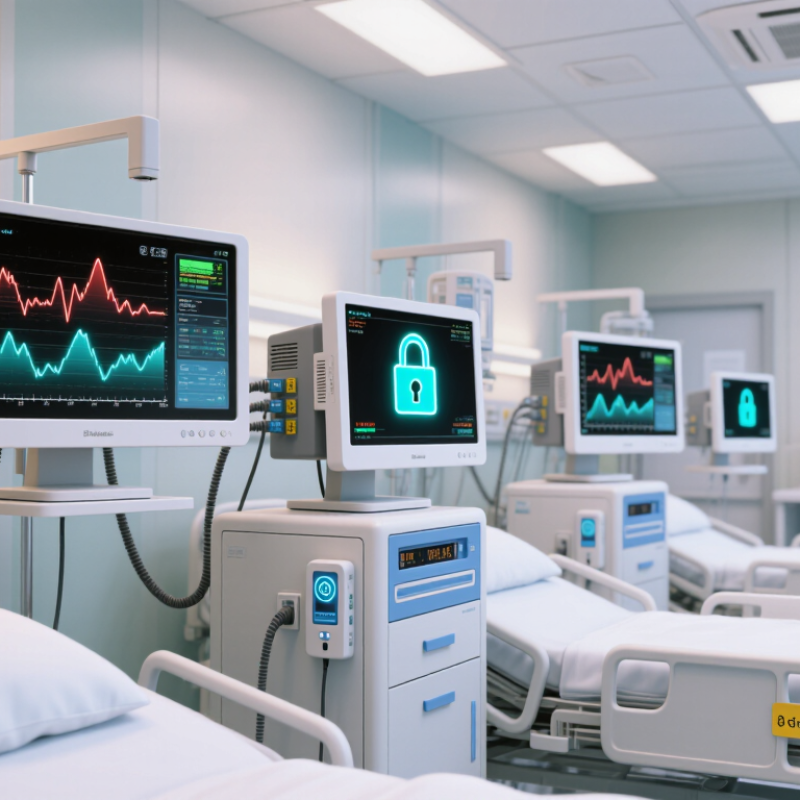
China Top 10 Networked Patient Monitors For Data Privacy

Definition and Role of Networked Patient Monitors in China

China Top 10 Networked Patient Monitors For Data Privacy

Networked patient monitors are bedside systems connected to hospital networks. They collect heart rate, oxygen saturation, blood pressure, temperature, and breathing patterns. In China, these systems support continuous observation in intensive care units, emergency rooms, and general wards. Data can move from a bedside screen to a nursing station within seconds. That connection helps clinicians notice dangerous changes earlier, especially when several patients need attention.

Privacy is part of the monitor’s clinical role. Hospitals should control access through individual accounts and role-based permissions. Encryption can protect information during transmission and storage. Audit logs can show who viewed or changed a patient record. Network segmentation also limits damage when one device develops a security weakness. Clear retention rules are important, because old monitoring data may remain on local servers longer than expected.

The practical experience is less perfect. A weak wireless signal may delay an alert. Poor sensor contact can produce misleading readings. False alarms may also cause staff to ignore genuine warnings. People still matter. Nurses and physicians must verify unusual values against the patient’s condition, not trust a screen blindly. Regular training, device maintenance, and privacy reviews make these systems more reliable. A monitor is useful, but it is not an independent decision-maker.

Data Privacy Standards for Connected Patient Monitoring Systems

Privacy starts at admission. A connected patient monitor collects waveforms, alarms, identifiers, and timestamps. Each data field should have a defined purpose before transmission begins. Data minimization reduces exposure when a device is misplaced or compromised. Encryption should protect information during transfer and storage. Strong authentication, role-based access, and short session timeouts limit unnecessary viewing. Clinical staff need rapid access, but convenience cannot replace control.

A credible top-ten evaluation should examine security design, not promotional claims. Look for documented risk assessments, secure software updates, vulnerability handling, and tested recovery procedures. Every access event should create a tamper-resistant audit record. Logs matter. They should show who viewed data, what changed, and when it happened. Network segmentation can separate monitors from administrative systems. Interoperability also requires careful validation, because incorrect patient matching can create a serious clinical risk.

Recognized frameworks, including ISO 27001, IEC 80001-1, and the NIST Cybersecurity Framework, can support structured reviews. Privacy impact assessments should involve clinicians, information-security staff, and patients where practical. Retention rules need clear deletion triggers, not vague promises. De-identified datasets still require scrutiny, since unusual timestamps or rare conditions may reveal identity. Perfect security is impossible. That weakness deserves honest reporting. A small hospital may lack dedicated specialists, so suppliers should provide readable evidence, training records, and incident contacts rather than unexplained technical language.

Criteria for Evaluating China’s Top 10 Privacy-Focused Monitors

Evaluating China’s top 10 privacy-focused networked patient monitors requires more than checking display quality. A credible review begins with hands-on testing in clinical-like conditions. We examine how each device collects, stores, and transfers patient data. Clear data maps matter. They show where readings travel, who can access them, and how long records remain available.

Security controls deserve equal attention. Strong encryption should protect data during transmission and storage. Role-based access must limit information to authorized staff. Multi-factor authentication adds useful protection for remote dashboards. Detailed audit logs should record logins, exports, edits, and failed attempts. We also inspect automatic logout settings and account recovery procedures. Small gaps can create serious exposure. Connectivity should support secure hospital networks without forcing unnecessary cloud transfers.

Reliability includes privacy maintenance after installation. Evaluators should review update schedules, vulnerability reporting, and documented response procedures. Independent testing or recognized security certifications can strengthen confidence, but they are not final proof. We test alerts, synchronization, and offline operation because privacy features should not weaken patient care. Local buffering may protect records during network outages. Data minimization is another practical measure: the monitor should collect only necessary information. No score is perfect. A polished interface cannot compensate for vague retention policies or weak administrator controls. My own assessment would remain cautious when technical documentation is incomplete, even if the monitor performs well in routine use.

China Top 10 Networked Patient Monitors For Data Privacy - Criteria for Evaluating China’s Top 10 Privacy-Focused Monitors

Criteria-based comparison for privacy, cybersecurity, interoperability, and compliance verification

Rank Anonymous Monitor Profile Typical Network Architecture Privacy Controls to Verify Security Controls to Verify Relevant China Requirements Data-Minimization Rating Verification Priority
1 Central-Station Multiparameter Monitor
For intensive-care and high-dependency environments
Bedside device connected to a local monitoring station and hospital information systems through a protected clinical network. Role-based access, configurable retention, patient-identifier masking, consent and notice workflow, export controls. Encrypted communication, signed firmware, audit logs, secure boot, account lockout, vulnerability-response process. PIPL; CSL; DSL; GB/T 35273-2020; GB/T 22239-2019; IEC 81001-5-1. High Critical
2 Bedside Vital-Signs Monitor
For ward-based spot checks and continuous observation
Local device with optional wireless connection to a clinical dashboard or electronic medical record. Minimum necessary patient fields, local privacy mode, configurable user permissions, controlled printing and export. WPA2-Enterprise or stronger network security, certificate management, inactivity timeout, event logging. PIPL; GB/T 35273-2020; GB/T 22239-2019; applicable medical-device cybersecurity documentation. High High
3 Transport Monitoring Unit
For intra-hospital patient transfers
Portable monitor using secured wireless connectivity, with temporary storage during network interruptions. Offline-data expiration, encrypted local storage, privacy-screen support, secure patient reassignment. Device authentication, encrypted synchronization, tamper evidence, secure deletion after transfer completion. PIPL; GB/T 35273-2020; GB/T 22239-2019; IEC 60601-1; IEC 81001-5-1. High High
4 Neonatal Monitoring Unit
For neonatal and pediatric intensive care
Bedside monitor integrated with a protected neonatal-care network and central alarm-management system. Separate child and guardian data handling, restricted access to sensitive observations, retention schedules. Least-privilege administration, secure alarm forwarding, signed updates, monitoring of abnormal access. PIPL; GB/T 35273-2020; GB/T 22239-2019; IEC 62304 where software lifecycle processes apply. Very high Critical
5 Wireless Telemetry Monitor
For mobile patients in monitored wards
Wearable or portable sensor communicating with a receiving gateway and central monitoring platform. Pseudonymous device identifiers, limited location data, transparent notice, configurable telemetry retention. Mutual authentication, encrypted radio communication, replay protection, gateway segmentation. PIPL; DSL; GB/T 35273-2020; GB/T 22239-2019; IEC 81001-5-1. Very high Critical
6 Remote-Care Monitoring Gateway
For supervised home or community care
Home measurement devices transmit through a gateway to an authorized clinical service platform. Explicit purpose limitation, user access and deletion channels, household-account separation, cross-border transfer review. Secure pairing, encrypted cloud connection, multi-factor administration, remote patching and incident response. PIPL; DSL; CSL; GB/T 35273-2020; cybersecurity classified-protection controls where applicable. Very high Critical
7 Operating-Room Monitoring System
For perioperative physiological monitoring
Dedicated clinical network with controlled interfaces to surgical information and archival systems. Restricted operating-room access, no unnecessary audio or video collection, controlled clinical-image association. Network isolation, removable-media control, audit trails, secure configuration backup, patch governance. PIPL; GB/T 22239-2019; GB/T 35273-2020; IEC 60601-1; IEC 81001-5-1. High High
8 Emergency-Department Monitor
For rapid assessment and short-term observation
High-availability bedside device connected to emergency dashboards and patient-registration systems. Fast patient reassignment, temporary-record controls, automatic screen locking, minimum demographic display. Strong operator authentication, secure emergency-access logging, segmented VLANs, resilient update process. PIPL; GB/T 35273-2020; GB/T 22239-2019; IEC 81001-5-1. High High
9 Step-Down Unit Monitor
For intermediate-acuity inpatient care
Ward-level monitor connected to a local server or central station with controlled clinical-system integration. User-role separation, configurable alarm-history retention, limited report access, patient-record correction controls. TLS-protected interfaces, audit logging, secure service accounts, vulnerability disclosure procedure. PIPL; GB/T 35273-2020; GB/T 22239-2019; applicable medical-device software controls. High Medium-high
10 Research-Enabled Network Monitor
For approved clinical studies and data analysis
Clinical monitor connected to a segregated research environment with controlled data export. Pseudonymization, study-purpose limitation, ethics approval linkage, de-identification before analysis. Research-network segregation, dataset approval workflow, encrypted exports, immutable access records. PIPL; DSL; GB/T 35273-2020; GB/T 22239-2019; relevant human-subject and clinical-research requirements. Very high Critical
Evaluation note: A monitor should not be classified as privacy-focused solely because it supports encryption or network connectivity. Procurement teams should request current technical documentation, penetration-test evidence, software bills of materials, data-flow diagrams, retention settings, incident-response procedures, and proof of compliance applicability before deployment.

Comparison of Security, Connectivity, and Clinical Data Features

China’s top networked patient monitors should be compared through security, connectivity, and clinical data features. A strong monitor encrypts data during transmission and storage. It should also support role-based access, audit logs, and secure software updates. These controls help reduce exposure when readings move from a bedside device to a central station.

Connectivity affects daily clinical work. Reliable wired and wireless options can link monitors with hospital information systems and electronic records. Interoperability matters more than a long feature list. A practical comparison should examine network stability, alarm delivery, device discovery, and recovery after connection loss. Clinical data should include trends, waveform review, timestamps, and clear patient identification. In busy wards, readable screens and fast retrieval can prevent small delays from becoming larger risks. Still, no comparison is perfect. Local network design and staff training may change performance significantly.

Tips: Ask how access is recorded and how quickly unusual activity is detected. Test a monitor during network interruption, not only in ideal conditions. Check whether exported data remains complete and clinically understandable. Also review retention settings and user permissions with clinical and information-security teams. One overlooked issue is alarm overload. More connected data does not always mean better care.

Procurement and Compliance Considerations for Healthcare Providers

Choosing among the China Top 10 Networked Patient Monitors for Data Privacy requires more than comparing screen size, alarm functions, or price. Healthcare providers should examine how each monitor collects, stores, and transfers patient data. Procurement teams need clear evidence of encryption, role-based access, audit logs, and secure software updates. Ask for independent test reports and a documented vulnerability response process. A polished sales demonstration is not enough.

Compliance should guide every contract. Confirm where patient data is processed, how long it remains available, and who can access it remotely. Require data minimization, breach notification duties, supplier access controls, and secure disposal procedures. The monitor should also fit existing hospital networks without exposing clinical systems. Segmentation, strong authentication, and controlled interfaces matter at the bedside. Local regulations and internal policies must be reviewed together.

Tips: Request a live security demonstration. Test account removal, password policies, audit-log export, and offline alarm behavior. Place selected monitors on a restricted VLAN before clinical deployment. Involve biomedical engineers, nurses, IT security staff, and legal reviewers. Our checklist is not perfect. It may overlook workflow pressure during emergencies. Therefore, run a small pilot, record unexpected access events, and revise procurement requirements before ordering at scale. Prioritize measurable controls over reassuring language.

FAQS

What are networked patient monitors?

They are bedside systems connected to hospital networks. They track heart rate, oxygen levels, blood pressure, temperature, and breathing.

Where are these monitors commonly used?

Hospitals use them in intensive care units, emergency rooms, and general wards. Readings can reach a nursing station within seconds.

How do these monitors support patient care?

They help clinicians notice dangerous changes earlier. However, a screen cannot understand the whole patient.

How should hospitals protect monitoring data?

Hospitals should use individual accounts and role-based permissions. Encryption should protect data during transmission and storage.

Why are audit logs important?

Audit logs record who viewed or changed patient information. They can reveal unusual access quickly.

What happens when the network connection fails?

Alerts may arrive late or stop temporarily. Hospitals should test recovery during real network interruptions.

Can sensor problems create inaccurate readings?

Yes. Poor contact can create misleading values. Staff should check the patient and the sensor together.

How can hospitals reduce alarm overload?

They should review alarm settings and remove unnecessary alerts. Too many alarms can make real warnings easier to miss.

What features matter when comparing these monitors?

Compare encryption, access controls, audit logs, network stability, trends, waveforms, and clear timestamps. A long feature list proves little.

Why do staff training and maintenance matter?

Trained staff can question unusual readings instead of trusting them blindly. Regular maintenance supports safer, more reliable monitoring. Mistakes still happen.

Conclusion

Networked patient monitors in China connect bedside devices with hospital information systems, enabling continuous collection, transmission, and analysis of vital signs. This article explains their role in improving clinical response, supporting remote observation, and coordinating care, while emphasizing that connectivity must be balanced with strong data protection. It reviews key privacy expectations, including access control, encryption, secure authentication, audit trails, data minimization, and reliable system updates.

The comparison framework for China’s top 10 privacy-focused monitors evaluates security architecture, network compatibility, interoperability, alarm management, data accuracy, usability, and clinical reporting capabilities. It also highlights procurement considerations such as vendor security assessments, system integration, staff training, maintenance responsibilities, and compliance documentation. The central question is: How to ensure data privacy when using networked patient monitors? Healthcare providers should establish clear governance policies, restrict data access by role, monitor system activity, protect information during transmission and storage, and regularly test both devices and connected networks.

Isabella

Isabella

Isabella is a dedicated marketing professional with a sharp focus on driving brand growth and engagement through strategic content creation. With an extensive background in digital marketing, she combines her passion for storytelling with her keen understanding of industry trends to deliver......