 Medovia Medical
Medovia Medical
Medovia Medical
Accurate results in laboratory settings hinge on regular calibration of lab devices. This process involves adjusting instruments to ensure they deliver precise measurements. The importance of this practice cannot be overstated. Dr. Emily Hart, a leading expert in laboratory management, emphasizes this need: “Neglecting calibration can lead to misleading data and flawed conclusions.”
The question, "Why is regular calibration important for lab devices?" is critical. Calibration helps maintain quality control in experiments. It also ensures compliance with industry standards. Devices like spectrophotometers, pipettes, and balances need frequent checks. Over time, wear and environmental factors affect readings. This variation can jeopardize experimental integrity.
Lab teams must prioritize calibration schedules. However, it’s not always easy to maintain consistency. Busy labs might overlook these checks, leading to errors. Even slight inaccuracies can snowball into major issues. Implementing a reliable calibration routine is essential, yet many facilities struggle with this aspect. It invites a moment of reflection on our practices in maintaining laboratory precision.
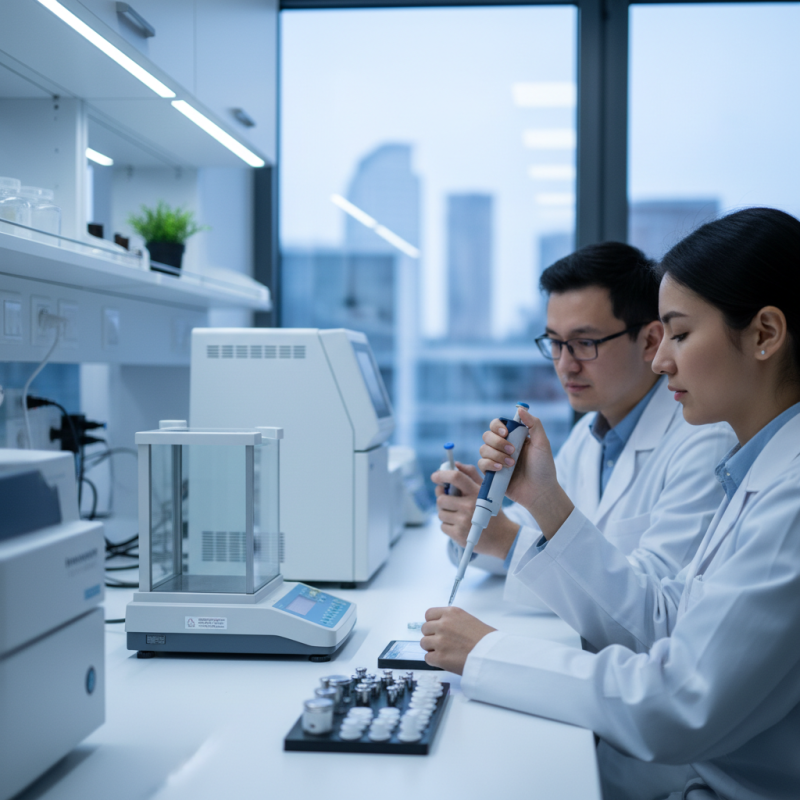
Calibration plays a crucial role in laboratory settings. It ensures that every instrument provides accurate measurements. Inaccuracies can lead to flawed experiments. For example, a miscalibrated balance may produce incorrect mass readings. Such errors can compromise research outcomes, leading to unreliable conclusions.
Regular calibration builds confidence in results. Laboratories must adhere to strict protocols to maintain device accuracy. Trained professionals should perform calibrations. Even slight deviations can affect sensitive experiments. Having a structured calibration schedule can prevent unexpected discrepancies. Monitoring changes over time is also critical. It helps identify trends and potential equipment issues.
However, maintaining a rigorous calibration routine can be challenging. Some labs may overlook this aspect due to time constraints. Others might face budget limitations. These factors can lead to a compromise in data quality. Lab managers need to emphasize the importance of calibration. Investing time and resources is essential for reliable results. A culture of quality assurance fosters better outcomes for all research activities.
| Device Type | Calibration Frequency | Calibration Standard | Last Calibration Date | Next Calibration Due | Status |
|---|---|---|---|---|---|
| pH Meter | Monthly | pH Buffer Solutions | 2023-09-15 | 2023-10-15 | Pending |
| Spectrophotometer | Quarterly | Standard Optical Density Solutions | 2023-08-10 | 2023-11-10 | On Schedule |
| Balances | Annually | Calibration Weights | 2023-03-20 | 2024-03-20 | In Compliance |
| Thermometer | Biannually | Thermometer Calibration Standards | 2023-05-25 | 2023-11-25 | Pending |
| Gas Chromatograph | Every 6 Months | Calibration Gases | 2023-01-10 | 2023-07-10 | Overdue |
: Calibration ensures instruments provide accurate measurements. Inaccuracies can lead to flawed experiments and unreliable conclusions.
A miscalibrated balance may produce incorrect mass readings, compromising research results and overall quality.
Calibration frequency depends on the device and its usage. Regular checks can prevent unexpected discrepancies.
Variations in procedures, human error, and environmental factors can all pose challenges and affect accuracy.
Establishing clear protocols and conducting regular training can help reinforce consistent calibration practices across the team.
Documenting calibration aids in compliance and helps identify trends or issues over time, promoting better practices.
Temperature and humidity fluctuations can alter measurements, making controlled environments important for accuracy.
Regular training and audits can help minimize human error and reinforce the importance of careful calibration.
Implementing a frequent check schedule can help detect instrument drift before it affects measurements significantly.
A survey revealed that only 60% of labs consistently follow established calibration schedules, which raises concerns.
Regular calibration of lab devices is essential to ensure accurate and reliable results in laboratory settings. Calibration helps maintain the precision of instruments, which is critical for experiments and analyses that rely on exact measurements. By understanding the calibration process, laboratories can implement regular checks that identify and resolve discrepancies, thus safeguarding the integrity of their results.
Steps for regular calibration include establishing a schedule based on usage and manufacturer recommendations, conducting thorough checks, and addressing any issues promptly. Common challenges in calibration, such as instrument drift and environmental factors, can be managed through proactive measures and maintenance practices. Additionally, keeping detailed calibration records is vital for compliance and quality assurance, helping answer the question: "Why is regular calibration important for lab devices?" Overall, consistent calibration practices lead to improved laboratory performance and more trustworthy outcomes.
