 Medovia Medical
Medovia Medical
Medovia Medical
In the world of healthcare, small diagnostic centers play a crucial role in providing timely results. These facilities often operate on tight budgets and need to maximize their efficiency. When establishing such a center, one must ask, "Which lab devices are essential for a small diagnostic center?" Selecting the right equipment can significantly impact patient care.
Essential laboratory devices range from basic to advanced technology. A microscope, for instance, is fundamental for examining samples. Other necessary devices may include centrifuges and analyzers. These tools help in diagnosing various conditions swiftly and accurately. However, it can be challenging to choose the right models. In some cases, centers may opt for less reliable devices to save costs. This choice can lead to diagnostic errors, affecting patient outcomes.
Investing in quality lab devices should be a priority. Yet, smaller centers often face pressure to cut expenses. It’s vital to balance affordability with reliability. This careful consideration ensures high standards of care. Small diagnostic centers must remember that their equipment directly influences their services. The right technology can enhance patient trust and satisfaction. Balancing cost and quality is essential for success.
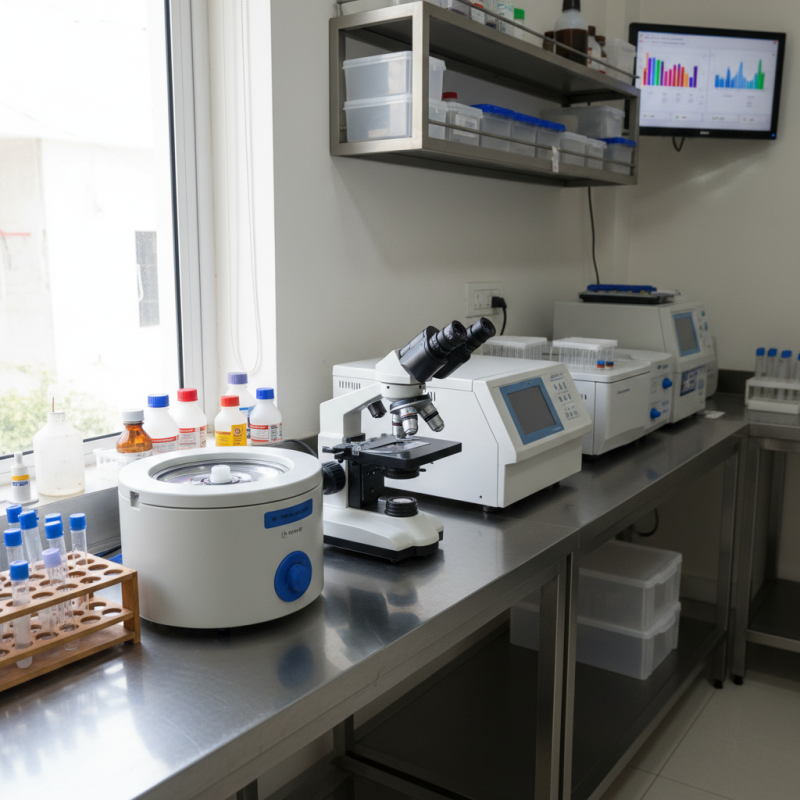
Small diagnostic centers play a crucial role in healthcare. They require various essential lab devices to ensure accurate testing and analysis. Key equipment includes centrifuges, microscopes, and analyzers. Each device serves a unique purpose and directly impacts patient outcomes.
Centrifuges are vital for separating components in blood samples. They must be reliable and easy to use. Microscopes provide essential insights into cellular structures. High-quality optics are necessary for accurate diagnosis. Additionally, analyzers can efficiently process multiple samples, saving time and resources.
Yet, selecting the right equipment can be challenging. Budget constraints are a common concern. Some diagnostic centers may settle for subpar devices to save costs. This decision can lead to inaccurate results. It's crucial for professionals to weigh the value of high-quality equipment against budget limitations. Investing in the right lab devices ultimately enhances diagnostic accuracy and improves patient care.
: Essential devices include centrifuges, microscopes, and analyzers. Each plays a unique role in testing.
Centrifuges separate components in blood samples. Reliable performance is key for accurate results.
Microscopes allow detailed examination of samples. They help identify pathogens and blood cells effectively.
Automated analyzers enhance test speed and precision. They process multiple samples efficiently.
Staff may need extensive training. Resistance to change can slow adaptation, impacting workflow.
Regular calibration and maintenance are essential. Proper staff training improves usage and accuracy.
High-quality equipment enhances diagnostic accuracy. Settling for subpar devices can lead to misdiagnosis.
Weigh the value of quality against costs. Prioritize crucial devices over non-essential ones.
Refer to manuals for troubleshooting. Regular maintenance can prevent many issues before they occur.
Continuous education keeps staff updated. It helps bridge gaps and promotes trust in new systems.
In small diagnostic centers, it is crucial to have access to essential lab devices that facilitate accurate and efficient testing. Key diagnostic instruments include basic equipment for routine tests, such as microscopes, centrifuges, and analyzers. These tools are fundamental for basic diagnostics and ensure timely patient care. Additionally, incorporating advanced technology tools can significantly enhance diagnostic accuracy, allowing for more precise results in a compact lab setting.
Cost-effective equipment solutions are particularly important for small labs constrained by budget, enabling them to maintain quality standards without overspending. Regular maintenance and calibration practices for lab devices are vital to ensure consistent performance and reliability. Ultimately, the question "Which lab devices are essential for a small diagnostic center?" highlights the importance of strategically selecting equipment that meets both clinical needs and operational efficiency.
