Medovia Medical
Patient monitors play a critical role in healthcare settings. They provide real-time data about a patient’s vital signs, such as heart rate and blood pressure. This data allows medical staff to make informed decisions quickly. But how do patient monitors track vital signs accurately? The answer lies in a combination of technology, calibration, and skilled interpretation.
Modern patient monitors utilize advanced sensors to detect physiological changes. These sensors gather data continuously, enabling instant feedback. Medical professionals often rely on algorithms to interpret this data, but these algorithms are not infallible. There are instances where readings can be skewed due to motion or equipment malfunction. Therefore, training and experience are crucial in ensuring the accuracy of the overall monitoring process.
Moreover, the integration of patient monitors with electronic health records enhances data reliability. This allows for better tracking over time. However, discrepancies can still occur, emphasizing the need for constant review and adjustment. Ultimately, while patient monitors are vital tools in healthcare, their accuracy depends on various human and technological factors.
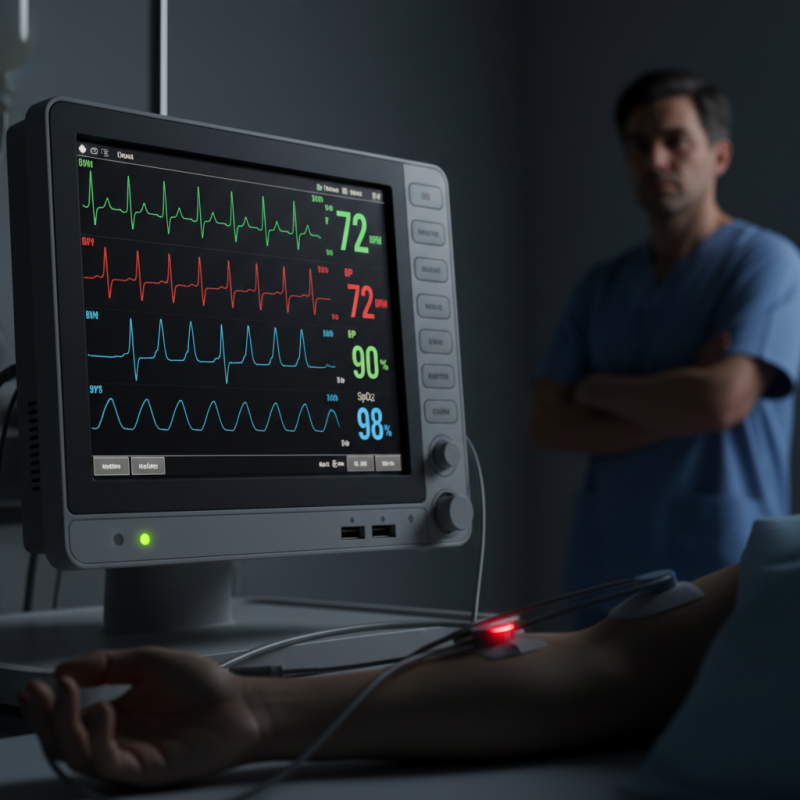
Patient monitors play a crucial role in healthcare by providing continuous tracking of vital signs. These devices help healthcare professionals make informed decisions, ensuring timely interventions. Accurate monitoring of heart rates, blood pressure, and oxygen levels is essential for patient safety. The reliability of these monitors can affect patient outcomes directly.
Tips for ensuring accurate readings include proper sensor placement. A misaligned sensor can lead to significant errors. Regular calibration of devices is also vital. This helps maintain accuracy over time. Familiarizing staff with equipment is crucial, as improper use can compromise data quality.
Additionally, some factors can interfere with readings. Movement, temperature, and even skin conditions may lead to discrepancies. Healthcare teams must remain vigilant and double-check readings if they seem unusual. Understanding the limitations of patient monitors is essential for maintaining reliable healthcare practices.
Patient monitoring systems play a critical role in healthcare by ensuring accurate tracking of vital signs. Several key technologies drive the effectiveness of these systems. Sensors are fundamental. They continuously measure parameters like heart rate, blood pressure, and oxygen saturation. These sensors convert physical signals into digital data. This transformation is crucial for real-time monitoring.
Wireless technology enhances patient mobility. It allows vital signs to be transmitted to central systems without cumbersome wires. However, this can also introduce challenges. Connectivity issues may lead to gaps in data. Regular checks are essential to maintain system integrity.
Tips: Consider updating software regularly. This ensures the system can handle new technologies. Use calibration techniques to improve sensor accuracy. Small adjustments can lead to significant improvements in monitoring. Additionally, invest in staff training. Knowledgeable personnel can elevate the quality of patient care. Data is powerful, but only if it is accurate and reliable.
This chart illustrates the average values of vital signs monitored in patients. Accurate tracking of these signs is crucial for assessing a patient's health and making informed decisions in healthcare settings.
Patient monitors play a vital role in healthcare, ensuring accurate tracking of vital signs like heart rate, blood pressure, and oxygen saturation. These devices utilize various sensors and algorithms to collect data in real-time. According to a report from the Medical Device Group, up to 1.5 million patient monitors are used in hospitals worldwide, emphasizing their critical position in patient care.
One key mechanism for achieving accuracy involves the integration of advanced sensor technology. For example, photoplethysmography (PPG) is commonly employed for heart rate monitoring. This non-invasive method helps capture changes in blood volume, providing reliable data. Moreover, studies indicate that devices using PPG exhibit a 95% accuracy rate in measuring heart rates. However, environmental factors can sometimes affect readings. Motion artifacts and external light can lead to discrepancies, presenting an area for further improvement.
Calibration algorithms are another essential element in ensuring that patient monitors deliver precise measurements. These algorithms adjust sensor outputs based on various parameters, offering higher accuracy. A report by the Journal of Biomedical Engineering highlighted that real-time calibration can reduce measurement errors by nearly 30%. Even with advanced technology, occasional inaccuracies still occur, demanding ongoing refinement. This evolution is crucial for enhancing patient safety and outcomes.
Accurate tracking of vital signs is essential in healthcare. Various factors can affect the precision of these readings. One major factor is the placement of sensors. For instance, an improperly positioned blood pressure cuff can lead to false results. Accuracy diminishes when sensors are placed over clothing or on uneven skin surfaces.
Patient movement can also disrupt readings. Even slight movements during the monitoring process may generate unreliable data. Environment plays a key role too. Excessive noise or electronic interference can skew measurements.
Calibration of devices is crucial. Regular checks ensure that monitors deliver precise results. However, not all facilities adhere to strict calibration schedules, which can lead to inconsistent data.
Finally, interpretation of the readings can introduce errors. Healthcare professionals must be well-trained. Their experience significantly influences how they analyze and respond to the data. Misinterpretation can occur, particularly with complex cases. Continuous education on new monitoring technologies is vital for improving accuracy in patient care.
Patient monitoring technology has advanced significantly, helping healthcare professionals track vital signs with greater accuracy. Future innovations promise improvements in how these devices collect and process data. For instance, new algorithms will analyze patient information more effectively, ensuring timely interventions. Wearable devices are also on the rise, offering continuous monitoring capabilities.
One exciting development is the integration of artificial intelligence in patient monitors. AI can predict potential health issues by recognizing patterns in the data. This means that healthcare providers can act before problems escalate. Additionally, improvements in sensor technology will likely enhance data precision. These innovations aim to minimize errors and increase reliability.
**Tip:** Always cross-check monitor readings with clinical assessments to ensure accuracy. Technology is a tool, not a substitute for professional judgement. Keep an eye on emerging trends and be open to refining your practices. Remember, even cutting-edge tools require thoughtful implementation and ongoing evaluation.
: Patient monitors continuously track vital signs, aiding healthcare professionals in timely interventions.
Accurate monitoring ensures patient safety and directly impacts patient outcomes.
Misaligned sensors can lead to significant errors, affecting the reliability of data.
Movement, temperature changes, and skin conditions can disrupt the accuracy of measurements.
Regular calibration is vital for maintaining accuracy over time and ensuring precise results.
Familiarizing staff with equipment is crucial. Proper use helps maintain data quality.
Yes, excessive noise or electronic interference can skew measurements and affect results.
Misinterpretation can occur, especially in complex cases. Continuous education is necessary.
Even slight movements can generate unreliable data, impacting overall monitoring effectiveness.
They must remain vigilant and double-check readings to ensure reliable healthcare practices.
Patient monitors play a critical role in healthcare by providing real-time tracking of vital signs, ensuring that clinicians can respond swiftly to patient needs. The key technologies employed in these systems include advanced sensors, algorithms, and data processing capabilities that work together to measure parameters such as heart rate, blood pressure, and oxygen saturation. A crucial aspect of how do patient monitors track vital signs accurately lies in their sophisticated mechanisms that leverage these technologies to minimize measurement errors and enhance data reliability.
However, several factors can influence the accuracy of vital signs readings, such as patient movement, environmental conditions, and the calibration of monitoring devices. As technology evolves, future innovations are expected to address these challenges further, leading to improved precision in patient monitoring. Ultimately, the ongoing development in this field promises to enhance the quality of care and patient outcomes significantly.
