Medovia Medical Medovia Medical

Top 10 Modern Anesthesia Machine Features to Look For?

Time:2026-10-14 Author:Madeline
0%

What features should I look for in a modern anesthesia machine? The answer begins with patient safety, not a longer specification sheet. A contemporary system should provide accurate gas delivery, dependable oxygen monitoring, integrated capnography, low-flow efficiency, and clear alarm management. It should also support battery operation, automatic self-testing, electronic records, and ventilation modes suited to fragile lungs.

The World Health Organization reports that approximately one in ten patients experiences harm during healthcare, while more than half of that harm is preventable (WHO, Global Patient Safety Action Plan 2021–2030). The Lancet Commission on Global Surgery also estimated that five billion people lack access to safe, affordable surgical and anesthesia care. These findings make reliability, usability, and maintenance central purchasing questions. A bright screen is useful. A confusing screen is dangerous.

Patient-safety expert James Reason offered a principle that applies directly to anesthesia technology: “We cannot change the human condition, but we can change the conditions under which humans work” (Reason, BMJ, 2000). Modern machines should therefore reduce cognitive load, expose failures early, and preserve manual control when automation becomes uncertain. ECRI’s annual health-technology hazard reports reinforce the need to assess alarms, cybersecurity, training, and equipment integration—not just ventilation performance.

No machine removes clinical risk. That is the uncomfortable part. Features may look impressive during a demonstration, yet fail under pressure, poor maintenance, or unfamiliar use. This guide examines ten practical features, including workflow design, backup systems, data visibility, and service support, so buyers can judge real-world safety rather than marketing language.
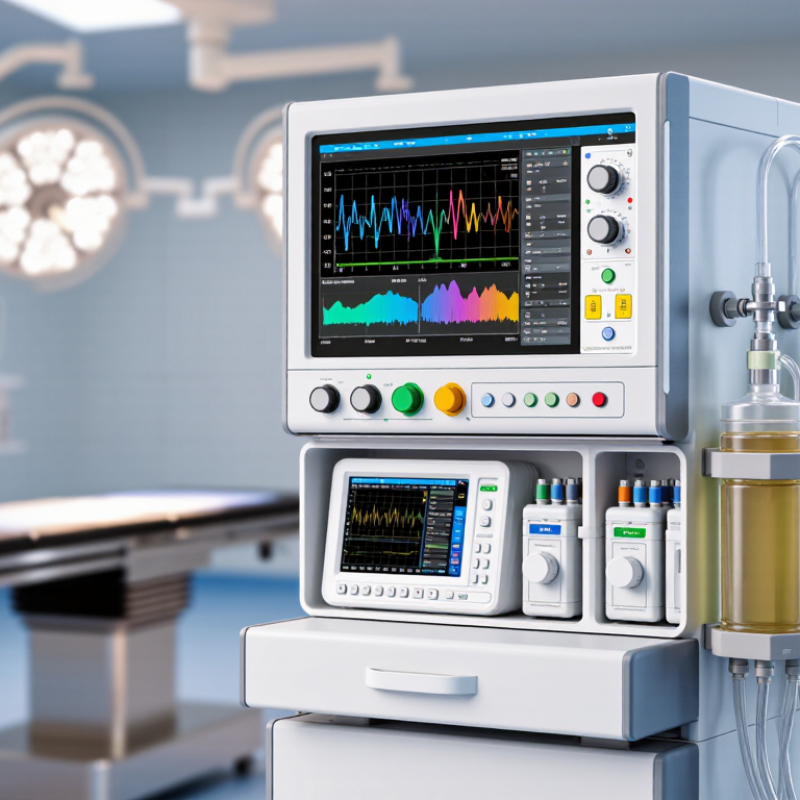
Top 10 Modern Anesthesia Machine Features to Look For?

Gas Delivery: ISO 80601-2-13 Accuracy and 21–100% O₂ Control

Top 10 Modern Anesthesia Machine Features to Look For: Gas Delivery

Gas delivery is the foundation of safe anesthesia. Look for documented alignment with ISO 80601-2-13, especially its requirements for essential performance and measurement accuracy. The machine should deliver oxygen across a controlled 21–100% range, with clear readings and stable flow during changing fresh-gas demands. Accuracy matters near the lower limit, where small oxygen errors can become clinically significant. Ask for test results, calibration intervals, and alarm specifications rather than relying on a sales display.

A practical evaluation should include oxygen concentration checks at different flows, pressures, and breathing patterns. Observe the screen while changing settings. Does the displayed value respond quickly? Are low-oxygen alarms obvious? Independent oxygen analyzers can reveal drift that routine checks miss. No display is infallible. That deserves attention. Also verify how the system behaves during pipeline pressure changes or when cylinders become the backup source. Real-world reliability depends on maintenance, staff training, and documented pre-use checks, not only factory claims.

Tips: Confirm the 21–100% oxygen range under actual operating conditions. Review service records and calibration certificates. Test alarms with trained personnel. Record unexpected behavior, even when it seems minor. Small inconsistencies may expose a larger weakness. A useful checklist should include flow accuracy, oxygen monitoring, alarm timing, backup supply changeover, and the date of the next inspection.

Modern Anesthesia Machine Feature: O₂ Control Range

The chart shows representative oxygen concentration points across the 21–100% control range: room air at approximately 21%, a 50% oxygen blend, and 100% oxygen. Under ISO 80601-2-13, gas delivery performance and displayed oxygen concentration should be verified against the applicable requirements and the machine’s specified accuracy; this chart illustrates the control span and is not a conformity test.

Breathing Systems: Leak Testing, CO₂ Absorption, and Circuit Safety

A modern anesthesia machine should make breathing-system faults visible before induction. In clinical engineering practice, I inspect hoses, connectors, valves, and the reservoir bag. Then I perform the automated leak test and a manual occlusion test when required. Pressure should remain stable, not merely reach a green screen. Small leaks matter. A failed test deserves investigation, not repeated clicking. They often hide at the bag port, valve, or absorber seal.

CO₂ absorption needs equal attention. The canister must seat firmly, with a clean, undamaged gasket. Fresh absorbent does not guarantee safe performance if gas bypasses the chamber. A color indicator helps, but color alone is imperfect. Dry or exhausted absorbent can increase rebreathing risk. I verify inspired and expired CO₂ after changing the canister. Capnography gives the breathing system a voice. Look closely.

Circuit safety also depends on pressure relief, directional valves, and secure connections. A kinked tube can appear harmless while airway pressure rises. A disconnected tube may cause low pressure and inadequate ventilation. Alarms should be adjustable, distinct, and difficult to silence accidentally. Still, alarms cannot replace bedside observation. Check chest movement, bag motion, airway pressure, and the capnogram together. I have seen checklists become rituals. That is worth challenging. A careful pause often finds what software misses.

Ventilation Performance: 20–1500 mL Tidal Volume and Compliance Compensation

Modern anesthesia machines need ventilation controls that behave predictably across very different patients. A stated tidal volume range of 20 to 1500 mL suggests support for neonates, children, and adults. Yet range alone proves little. Clinicians should examine delivered-volume accuracy, minimum increments, response time, and pressure limits. Small errors matter.

At 20 mL, sensor resolution and circuit leaks can materially change the breath reaching the patient. At larger volumes, flow stability and inspiratory valve performance become more important.

A practical evaluation should compare set volume with measured volume during pressure-controlled and volume-controlled ventilation. Repeat the test after changing respiratory rate, inspiratory time, and PEEP. Real rooms are rarely perfect.

Compliance compensation is equally important. The breathing circuit, hoses, filters, and humidification components can absorb part of each delivered breath. A capable system measures circuit behavior and adjusts output to reduce that loss. This compensation should remain reliable when tubing changes or the circuit warms. Ask for test data, not only brochure language. I would also watch for excessive pressure, delayed alarms, or unstable volumes during a lung test. These observations often reveal weaknesses that a wide specification range can hide.

Monitoring and Alarms: FiO₂, EtCO₂, and IEC 60601-1-8 Requirements

When assessing a modern anesthesia machine, monitoring deserves more scrutiny than touchscreen size. During a pre-use check, confirm that FiO₂ readings respond quickly to oxygen changes. The display should remain clear from the clinician’s normal position. Low-oxygen alarms must be adjustable, visible, and audible. They should not disappear inside crowded menus.

EtCO₂ monitoring provides direct evidence of ventilation and circuit performance. Check the waveform, numeric value, sampling line, and apnea alarm. A flat trace may indicate apnea, disconnection, obstruction, or a sampling problem. The machine should help clinicians distinguish these possibilities.

The Joint Commission reviewed 98 alarm-related events, including 80 deaths, in its Sentinel Event Alert, Issue 50. Alarm quality is not a cosmetic feature. It can influence recognition time.

IEC 60601-1-8 defines general requirements for medical alarm systems, including priority, signal characteristics, and operator information. It does not replace anesthesia-specific performance requirements. Buyers should also review applicable anesthesia workstation standards, such as ISO 80601-2-13. ECRI’s annual health technology hazard reports repeatedly identify alarm overload and poor alarm management as safety concerns.

A practical test matters more than a brochure: disconnect the breathing circuit, change oxygen concentration safely, and simulate absent ventilation. Listen from the working position. Small weaknesses appear quickly.

Still, alarm settings are not universally perfect; patient condition, procedure, and local policy may require careful adjustment.

Connectivity and Efficiency: HL7 Integration and Fresh-Gas Flow Below 1 L/min

Modern anesthesia machines should connect cleanly with hospital information systems. HL7 messaging can transmit patient identifiers, settings, alarms, and gas measurements. FHIR APIs may support newer dashboards and analytics. The ONC’s 2023 interoperability data showed that about 70% of U.S. hospitals routinely exchanged electronic health information across core interoperability functions. Yet operating-room devices often remain poorly mapped. That gap matters. A connected system can reduce manual charting and expose unusual trends earlier. It can also support maintenance records and utilization audits. Use local terminology carefully. Bad mapping remains dangerous.

Fresh-gas flow below 1 L/min can reduce anesthetic waste when clinically appropriate. A 2021 review in Anaesthesia reported reductions of roughly 40–60% in volatile-agent consumption under some low-flow protocols. Results vary with agent choice, leakage, warm-up time, and clinician technique. Health Care Without Harm and Arup estimated healthcare produces 4.4% of global net emissions in their 2019 climate-footprint report. That makes gas efficiency operationally important, not merely fashionable. Look for stable delivery at low flows, visible leak compensation, rapid oxygen monitoring, and clear trend displays. Do not treat “below 1 L/min” as an automatic target. Patient needs come first. The interface may still frustrate users.

FAQS

Why is leak testing important before induction?

Leak testing reveals faults in hoses, connectors, valves, bag ports, and absorber seals. Pressure should remain stable. A failed test needs investigation, not repeated clicking.

What should a manual occlusion test confirm?

It should show whether the breathing system holds pressure correctly during controlled occlusion. Watch the pressure closely. A green screen alone is not enough.

How can a faulty carbon dioxide absorber affect ventilation?

A loose canister, damaged gasket, or exhausted absorbent can allow carbon dioxide rebreathing. Fresh absorbent does not guarantee safe performance. Verify inspired and expired carbon dioxide afterward.

Is absorbent color a reliable replacement for monitoring?

No. Color indicators help, but they can be imperfect. Check the capnogram and carbon dioxide values too. Look closely.

What circuit problems can change airway pressure?

A kinked tube may raise airway pressure, while a disconnected tube may cause low pressure. Inspect every connection physically. Small faults matter.

Why are bedside observations still necessary when alarms are available?

Alarms support observation but cannot replace it. Check chest movement, reservoir-bag motion, airway pressure, and the capnogram together. Software can miss context.

What should be checked in inspired oxygen monitoring?

FiO₂ readings should respond quickly when oxygen concentration changes safely. The display must remain readable from the working position. A crowded menu is a weakness.

What does a flat EtCO₂ waveform potentially indicate?

It may suggest apnea, disconnection, obstruction, or a sampling-line problem. Check the patient and circuit immediately. Do not assume one cause.

What makes an alarm system clinically useful?

Alarms need adjustable limits, clear visibility, audible signals, and distinct priorities. They should be difficult to silence accidentally. Perfect settings do not exist.

How should alarm performance be tested before clinical use?

Test circuit disconnection, safe oxygen changes, and absent ventilation simulation. Listen from the clinician’s normal working position. A practical test can expose hidden weaknesses.

Conclusion

Choosing a modern anesthesia machine requires careful attention to safety, accuracy, flexibility, and workflow efficiency. What features should I look for in a modern anesthesia machine? Start with gas delivery that meets ISO 80601-2-13 accuracy requirements and provides precise oxygen adjustment from 21% to 100%. The breathing system should support reliable leak testing, effective carbon dioxide absorption, and secure circuit protection. Strong ventilation performance is also essential, including a broad tidal-volume range of approximately 20–1500 mL and automatic compliance compensation to maintain consistent delivery across different patient conditions.

Advanced monitoring and alarm functions further improve clinical safety. Essential capabilities include continuous FiO₂ and EtCO₂ monitoring, clear alarm priorities, and compliance with IEC 60601-1-8 alarm requirements. For modern operating environments, connectivity with hospital information systems through HL7 can simplify documentation and data exchange. Finally, efficient fresh-gas flow below 1 L/min can help reduce gas consumption while supporting lower-flow anesthesia practices, provided the machine maintains stable gas delivery and accurate monitoring.

Madeline

Madeline

Madeline is a dedicated marketing professional with a wealth of expertise in our company's core offerings. With a keen understanding of the industry, she brings a unique perspective to her role, consistently delivering high-quality content that highlights the superior aspects of our products. As......